Water Well Drilling in Georgetown, TX
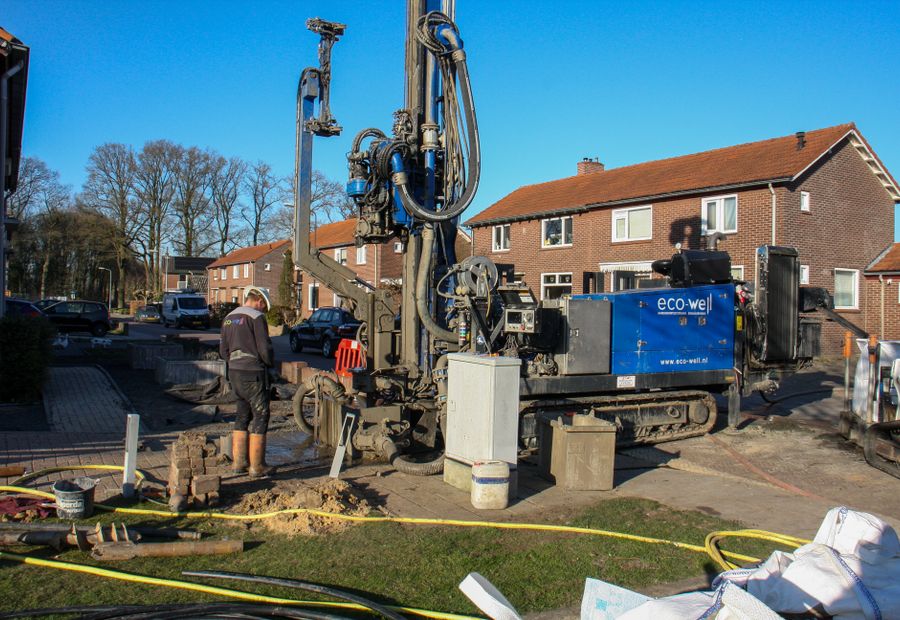
Georgetown Well Drilling drills, cases, and completes new water wells on rural and acreage property across Georgetown, Liberty Hill, and Williamson County, Texas. We handle the whole job: the permit with the groundwater district, the drilling, the steel or PVC casing, the pump and pressure tank, the wiring, and the water test that finishes it. We are a licensed and insured Texas water well contractor, and every well we drill is registered with the district that covers your land.
Most of the calls we get start the same way. Someone buys raw land past the end of the city main, and the house cannot exist until it has water. On that land the water comes from a private well or it does not come at all. There is no meter to tie into and no line running down the road. We drill the well that makes the property livable, and we size it for the home you are actually building, not for a template.
The Order of Work on a New Well
We read the ground first. We look at what nearby wells did, which aquifer your land sits over, and how deep the water is likely to be. Then we file the permit with the Central Texas Groundwater Conservation District and wait for it to clear. Then the rig comes in, drills the hole, and sets the casing to hold the wall and keep surface water out. Once we hit a sound producing zone we set the pump, plumb the pressure tank, wire the controls, and test the water and the flow before we call it done. Skipping the front of that sequence to save a week is how a well ends up short of water or short of paperwork.
Trinity or Edwards, and Why It Changes the Price
Williamson County straddles two very different aquifers. West and north of town the Trinity runs deep, and a Trinity well can mean hundreds of feet of drilling and casing before good water. Toward the Edwards limestone the water can come in shallower, but the rock is fractured and the yield swings from one lot to the next. Depth is the single biggest driver of what a well costs, so the honest number comes after we know which aquifer your land taps and how far down the water sits. We drill to sound water and case the hole to match, then we hand you a well that produces.
What You Decide, and When
How many people and how much irrigation the well has to serve, before we size the pump, because a house and a two acre garden are different loads. Where the well sits, at layout, held to the district spacing from lines, septic, and other wells. Casing material and pump size, which the depth and the water zone mostly settle for us. Access for the rig, before the drill date. Everything else follows the ground and the permit. Call (512) 555-0148.
How deep is a water well around Georgetown?
It depends on which aquifer your land sits over. West and north of Georgetown, many homes draw from the Trinity, and those wells often run from about 400 to well past 800 feet. Closer to the Edwards limestone the water can come in shallower, sometimes under 300 feet, but the yield is less predictable in the rock. We do not guess your depth from a table. We look at what nearby wells did, drill until we hit sound water, and case the hole to the depth the ground actually gives us.
How long does it take to drill a well?
The drilling and casing on a typical home well is usually one to three days once the rig is on site. The longer part is the calendar in front of that. The permit with the groundwater district, the rig schedule, and the pump and tank set that follows all take their own time. Plan for a few weeks from the first call to running water, and more in a busy season. We give you the real timeline for your lot, not a number meant to win the job.
Do I need a permit to drill a well in Williamson County?
Most of the county sits inside the Central Texas Groundwater Conservation District, and a new well there needs a permit and a registered driller before a bit turns. The district sets spacing from property lines and other wells, and it registers the well once it is complete. We are a licensed Texas driller, we file the permit, and we drill to the district rules so the well stands up to inspection. A well drilled without that paperwork is a problem you inherit at resale.
What does a new well cost here?
On current Central Texas jobs, a complete home well, meaning the drilling, the casing, the pump, the pressure tank, and the wiring, commonly runs from roughly eight thousand into the thirty thousand range. Depth drives most of it. A shallow Edwards well costs far less to reach than a deep Trinity well that needs hundreds of feet of casing. We price the well after we know your target depth, not over the phone, because a quote written before that is a guess.
Will my well run dry?
A well drilled to a good producing zone and cased correctly should serve a household for decades. The risk is a shallow well finished in a thin water zone, which a hard drought can pull down. That is why we drill to a sound zone and set the pump deep enough to keep water over it. If a drought does drop your level, the fix is usually a lower pump or a deeper hole, not a whole new well, and we will tell you which one your case needs.